Guiding a child through grief: 594 days without Indy.

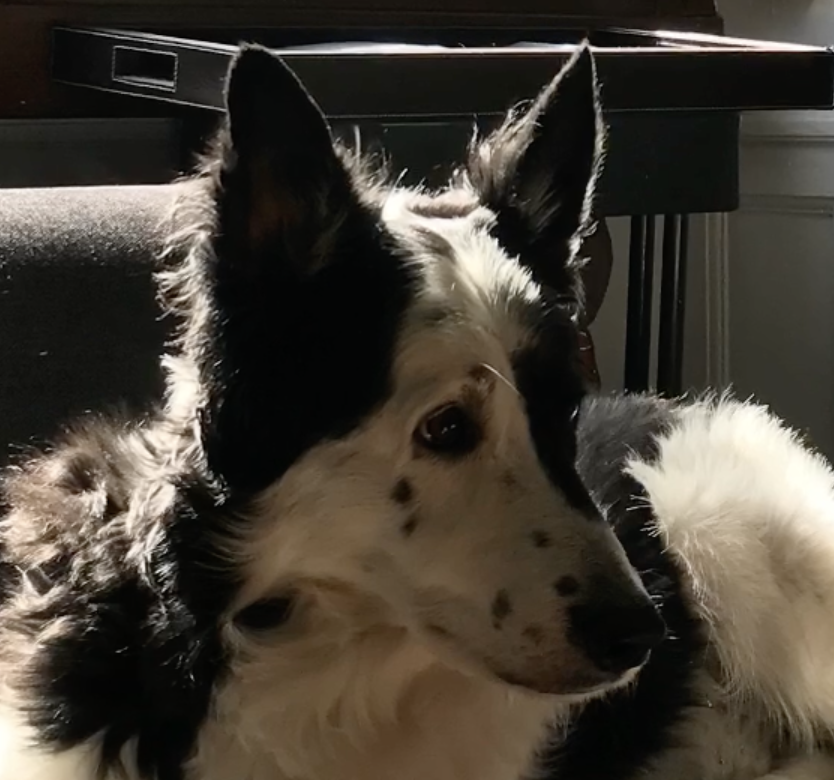
It has been 594 days, and we still miss you, Indy.
One year and seven months ago, our beloved family member, Indy, passed away suddenly from a ruptured spleen. I am in my forties. I have been through grief before. I still move through waves from losses that wreck me from time to time. But for my 11-year-old, Indy was her whole world. He was her brother.She was born and came home to her pup.
She pulled his fur and babbled away, burying her tiny head in his chest, and he would lie on the ground so patiently waiting for her to move. When she was learning to walk, she would use Indy as her own personal ladder, pulling herself up and then taking steps with him right there by her side.
When Indy first passed away, I thought it would be impossible to guide myself and my child through the crashing waves of grief and anger and sadness and that deep aching loss. But we did. We kept moving, one moment at a time. And little by little, the waves decreased in frequency and intensity.
I have been thinking about adopting another dog, but it all still feels too soon because there will never be another Indy. And for all his fluffy love, he did chew through eleven expensive large dog beds, one corner of a whole wall, the bottom of a door, many books, endless shoes, and more. And sometimes I wonder, can I really handle all that again? (Yes. Because love grows your heart in ways that will carry you through the moments of nooooo not again...)
Tonight, after a very long day, I came out of the kitchen to find her curled up on the couch well after her bedtime. Annoyed, I asked her why she wasn't in bed already.
She got up with her pre-teen energy and said, "Mama, I was going ok?!"
Pause. Breathe. Yes, it’s after 9pm, and she should be in bed, but clearly something else is going on. This isn’t about you.
So I ask, “What’s going on, kiddo? Are you ok?”
And she opens her mouth, and out tumbles a howl I know well. A howl tied to loss and anger and grief. And then the words: “I miss Indy, mama…”
And I immediately soften and say, "ohhhh, baby," and pull her into my arms, and she howls and cries and wails, and I breathe with and for her and squeeze her tight as I've learned to do over these 594 days.
After a while, we make our way to bed. She’s clutching her stuffed animals, tucked into the crook of her elbow. We share memories of Indy, the good ones, the funny ones, the naughty ones, and we laugh.
Slowly, her eyelids grow heavy, and then we say our little prayer, the one we say every night, which always ends the same way:
“Good night, Indy. We love you.”
And I am reminded, again, that part of my work as my daughter’s guide on this earth is not to quiet the howl, or rush her through it, or make meaning too quickly. Grief must be allowed to move. So my work is to stay. To hold space for the sound to leave her body. To let grief move, shake, cry, wail, so the ache does not settle into her bones and calcify into something hard and bracing she has to carry for decades.
This is how I teach her; she is not alone. This is how we practice as somatic abolitionists, refusing the violence of containment, choosing release over repression, teaching her, by staying with her, that her body is allowed to feel everything it needs to feel. This is our work: to keep the channels open, between our bodies and the living world, between the love that was the love that remains.
With utmost love,
Uma